World Cup 2026: everything about the tournament that kept us up all summer
Forget normal sleep - this summer football moved across the Atlantic and kept us up late. The 2026 World Cup was the biggest in history: three hosts, three time zones and a record number of teams. And it ended the way the best tournaments do - with a final nobody watching will forget.
In short: the tournament was played in the summer of 2026 in the USA, Canada and Mexico, with 48 teams for the first time instead of the previous 32. Spain beat Argentina 1-0 in the final on 19 July 2026 at MetLife Stadium near New York, winning their second World Cup after 2010.
48 teams: what actually changed
The big story was the expansion. From 32 to 48 teams - not simply a longer tournament, but a different one. More countries, more debutants, more matches and more room for surprises. The smaller footballing nations that used to watch from the sidelines finally had a ticket to the main stage.
The expanded format also meant a heavier schedule. A bigger group stage, and a longer road to the final. For fans that was a straight bonus: more evenings with something worth watching.
Three hosts and the scale of it all
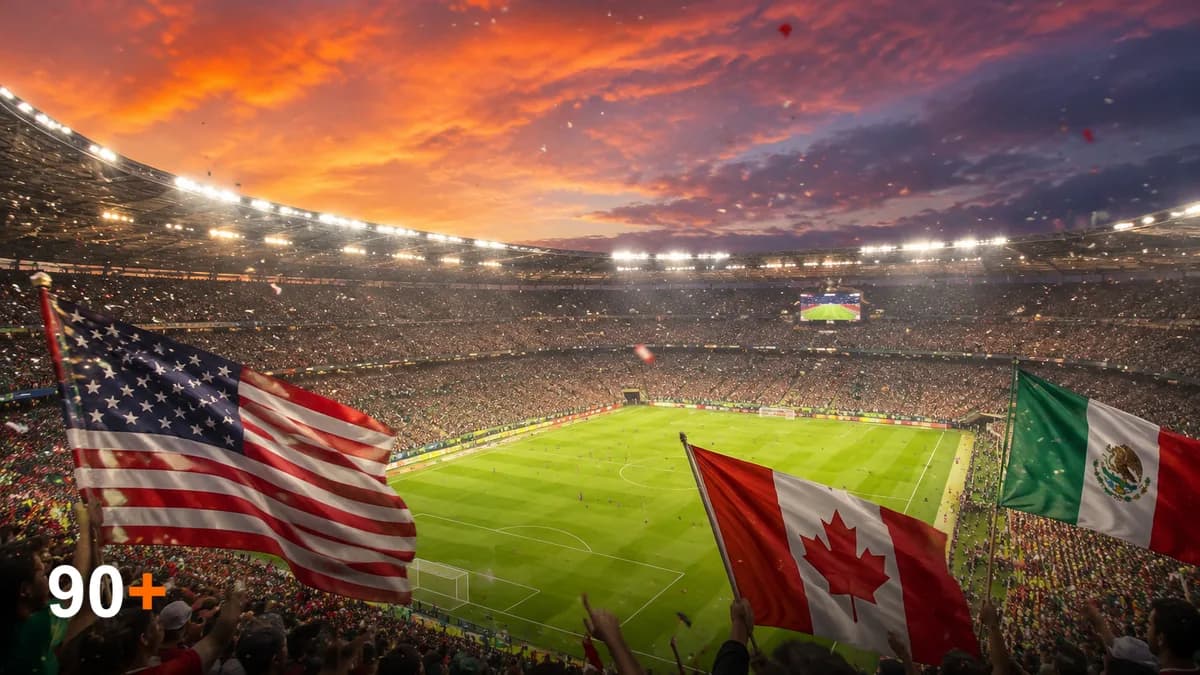
For the first time a World Cup was staged in three countries at once. The matches were spread across cities in the USA, Canada and Mexico - from Vancouver to Mexico City, with the bulk of it in the United States.
- USA - the most host cities and the decisive matches, including the final.
- Mexico - a country with enormous footballing passion and the legendary Azteca stadium.
- Canada - a relatively new footballing appetite, but a genuine appetite for the occasion.
The scale is hard to fit into one sentence. The distances between cities were the width of Europe, and the atmosphere was something we hadn't seen before.
How the final was decided
The group stage was the warm-up - the real drama started in the knockouts. There every mistake is fatal, and one missed penalty can haunt a whole nation for years. The knockouts are where the myths are made.
And the final delivered one. Spain and Argentina went 98 minutes without a goal before Ferran Torres settled it in extra time - 1-0, and Spain lifted the trophy for the second time, sixteen years after 2010. Argentina, the defending champions, came up one goal short.
Watching it from Bulgaria: the time-zone problem
Here was the big catch: the time zones. Bulgaria is roughly seven hours ahead of the US East Coast, and further still from Mexico and the West Coast. In practice a lot of the matches kicked off late in the evening and ran through the night.
If you followed it live, you already know the drill - and the same applies to every tournament played across the Atlantic:
- Stock up on patience for the next working day.
- Watch the big evening matches live and catch the late-night ones on replay if sleep wins.
- Check the match schedule and kick-off times so you don't miss the ones that matter.
Snacks, the remote and strong coffee are part of the ritual. No explanation needed.
Why this World Cup was special
Beyond the record number of teams and the three hosts, this was a tournament of transition. A new generation of stars took the baton, while some of the biggest names played what was probably their last World Cup. There's something nostalgic and thrilling at the same time about watching one era leave while the next is only starting.
Everything about the competition - the final standings and how it played out - lives in the 2026 World Cup hub.
Frequently asked questions
Who won the 2026 World Cup?
Spain. They beat Argentina 1-0 in extra time in the final on 19 July 2026, with Ferran Torres scoring the only goal. It was Spain's second World Cup title, after 2010.
Where was the 2026 World Cup final played?
At MetLife Stadium in East Rutherford, New Jersey, near New York. During the tournament FIFA referred to it as "New York New Jersey Stadium".
How many teams played at the 2026 World Cup?
48 for the first time - 16 more than the previous editions with 32 teams.
Where was the 2026 World Cup held?
Across three countries: the USA, Canada and Mexico. It was the first World Cup with three hosts.
The World Cup is done, but the football isn't. The club season is next, and you can turn every round into a personal challenge: try to call the exact scores of the upcoming matches and see whether your eye is as sharp as you think. Get the group together and argue with points, not just words.
It's easy to be an expert after the whistle. Real experts show up before the first one.
Play now